Common Zoysia Grass Problems in Georgia (And How to Fix Them)
Zoysia grass is one of the most popular choices for Georgia homeowners — and for good reason. It’s dense, traffic-tolerant, handles heat and drought well, and crowds out weeds once established. But Zoysia has its quirks. When things go wrong, Georgia homeowners are often unsure whether they’re dealing with disease, insects, poor maintenance, or something else entirely. Nature’s Turf has worked with Zoysia lawns across Georgia, and these are the problems we see most often.
Slow Spring Green-Up
Zoysia is the last warm-season grass to green up in spring and the first to go dormant in fall — it has the narrowest active growing window of any common Georgia turf. Homeowners frequently worry their Zoysia lawn is damaged or dead when it’s still brown in April, while neighbors’ Bermuda is already green. In most of Georgia, Zoysia doesn’t fully green up until late April to mid-May. Patience is the fix — but if large sections still haven’t greened by mid-May, investigate further for winter kill or pest damage.
Thatch Buildup
Zoysia is a prolific thatch producer. Its dense, slow-growing root system generates organic matter faster than it breaks down, and thatch layers exceeding one inch are common in lawns that haven’t been properly maintained. Excessive thatch blocks water and nutrient penetration, creates a spongy surface that’s prone to scalping, and harbors insects and disease. Lawn aeration and annual verticutting (power raking) are the primary tools for managing Zoysia thatch in Georgia, ideally performed in late spring after green-up.
Large Patch Disease
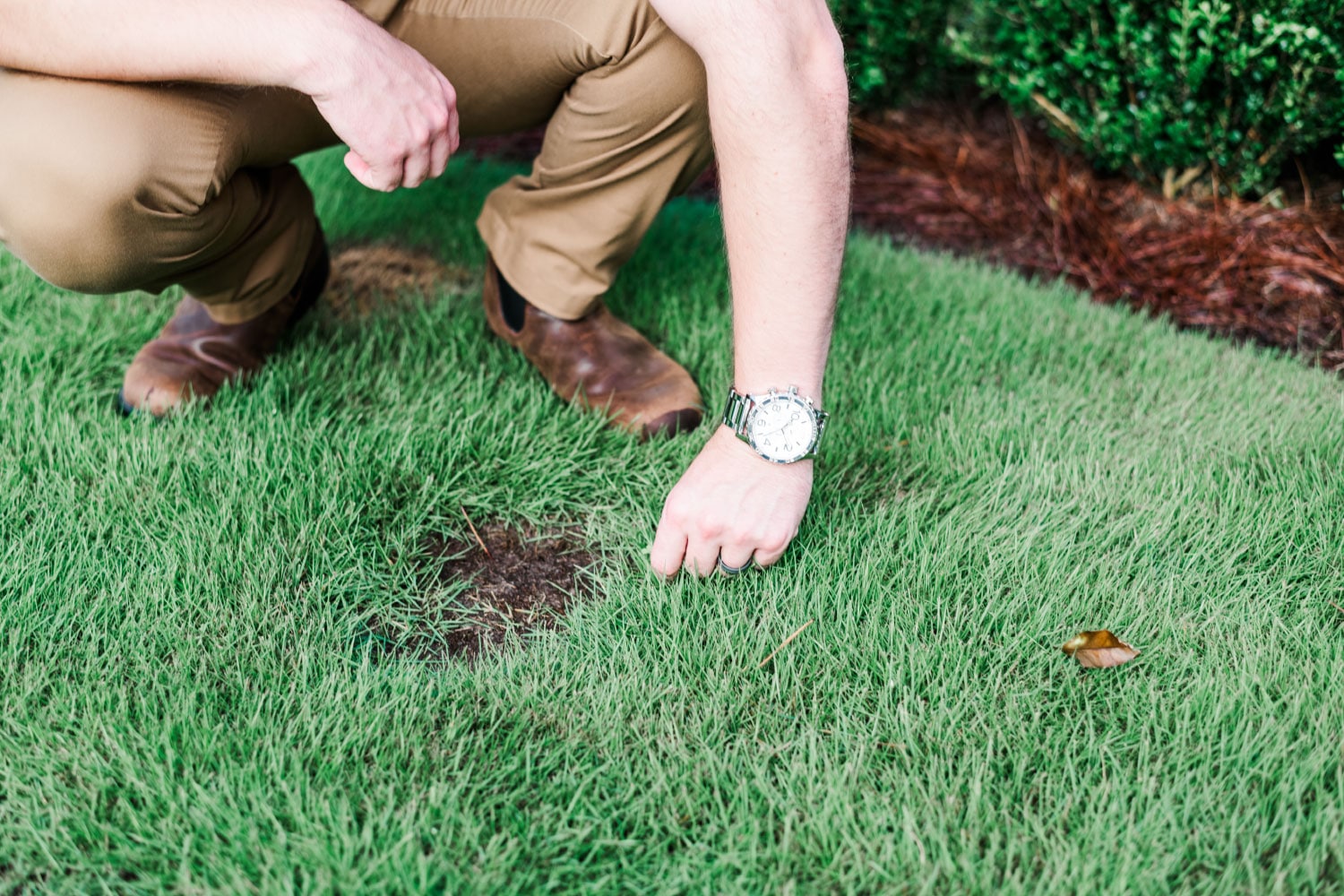
Large patch (Rhizoctonia solani) is the most significant disease threat to Zoysia grass in Georgia. It appears as circular brown or orange-tan patches that can expand to several feet in diameter. Unlike brown patch in fescue, large patch in Zoysia is most active in spring and fall — not summer — when soil temperatures are between 50 and 70°F. The patches often have an orange-brown halo of affected tissue at the outer edge during active disease periods. Preventative fungicide applications in September and again in April can significantly reduce large patch pressure in Georgia Zoysia lawns.
Zoysia Patch (Bermuda Grass Invasion)
Bermuda grass invading a Zoysia lawn is a frustrating and extremely common Zoysia grass problem in Georgia. Bermuda spreads aggressively by stolons and rhizomes and can overtake sections of Zoysia lawn quickly. The two grasses look similar from a distance, but Bermuda is finer-textured and greens up earlier in spring, creating visually distinct patches. Selective herbicides that kill Bermuda without harming Zoysia exist but are not widely available to homeowners — this is generally a situation where professional treatment is needed for meaningful control.
Scalping and Mowing Issues
Zoysia grows in a dense, slightly elevated mat and is very susceptible to scalping — cutting too deep into the thatch layer and exposing brown stems. This happens most often when mowing height is set too low or when the lawn surface is uneven. Zoysia should generally be maintained at 1.5 to 2.5 inches depending on the variety (Zeon and Empire handle higher heights; Meyer prefers 1.5–2 inches). Keep mower blades sharp — dull blades tear Zoysia’s tough stems rather than cutting them cleanly.
Chinch Bug Damage
While chinch bugs are most associated with St. Augustine grass, they do attack Zoysia lawns in Georgia, particularly during hot, dry summers. Damage appears as irregularly shaped yellow-brown patches that expand during drought stress. Confirm with a flotation test — push a bottomless can into the turf, fill with water, and watch for small black and white insects floating to the surface. Treat confirmed infestations with an appropriate insecticide; maintain adequate irrigation during summer to reduce stress that makes Zoysia more vulnerable.
Let Nature’s Turf Diagnose Your Zoysia Grass Problems
Many Zoysia grass problems look alike — thatch issues, large patch fungus, and mowing damage can all produce similar brown, patchy symptoms. Getting the diagnosis right is the first step to the right treatment. Nature’s Turf serves Georgia homeowners with Zoysia-specific lawn care programs that address thatch management, disease prevention, and seasonal maintenance. Contact Nature’s Turf today, and let’s figure out what your Zoysia lawn needs.